

1. Decide the sensing set first
The sensing set is the product. CO2, particulate (PM1.0 / PM2.5 / PM10), formaldehyde, TVOC, temperature and humidity can be combined freely, but every added channel affects cost, calibration effort and enclosure design — so start from what your buyer actually needs to see.
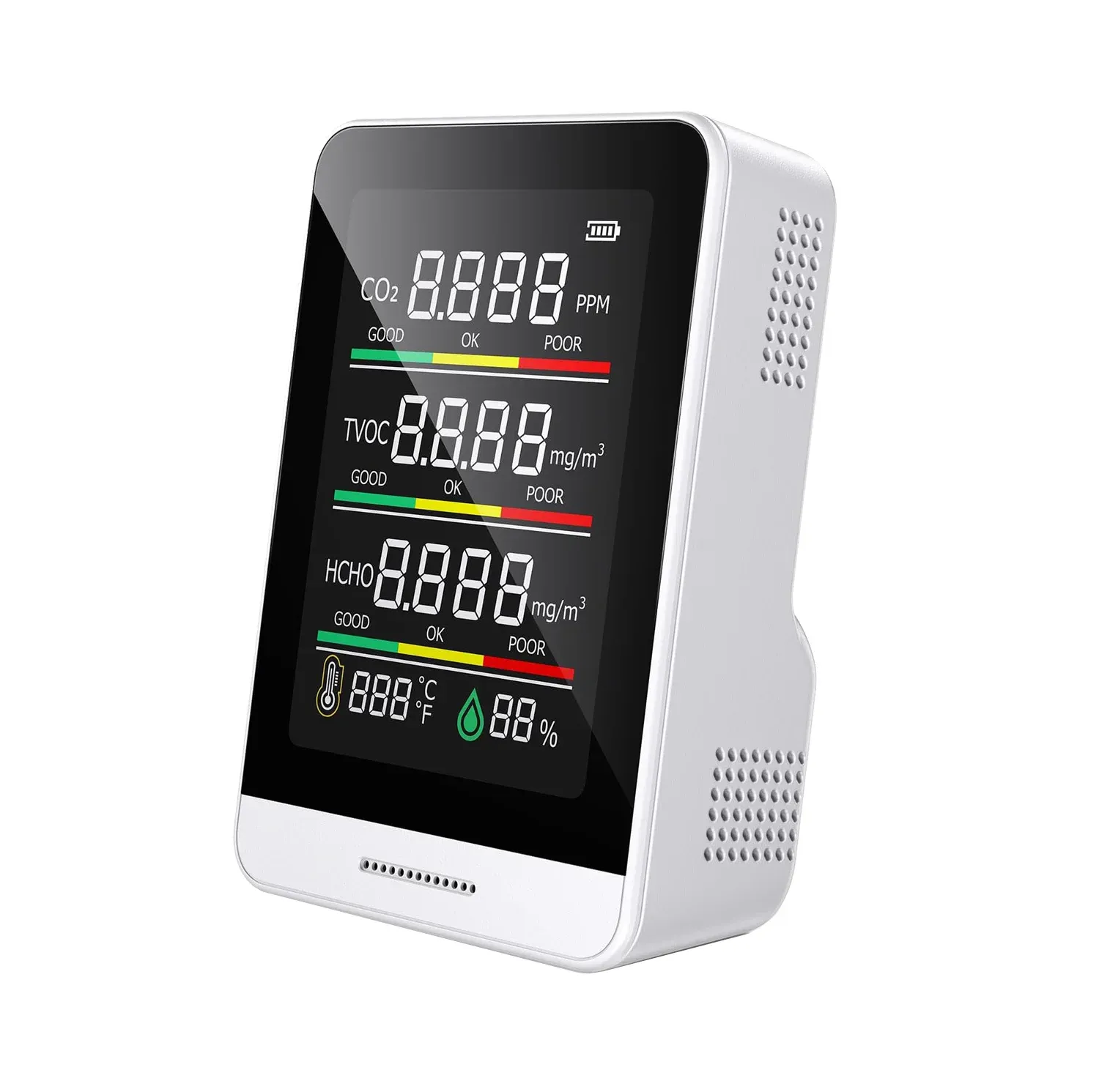
A useful test: which single reading will your customer look at every day? Homes tend to watch formaldehyde after renovation and CO2 in bedrooms. Offices and classrooms watch CO2 almost exclusively. Facilities teams want particulate. Build the set around that primary reading, not around the longest possible list.
2. Match the form factor to the room
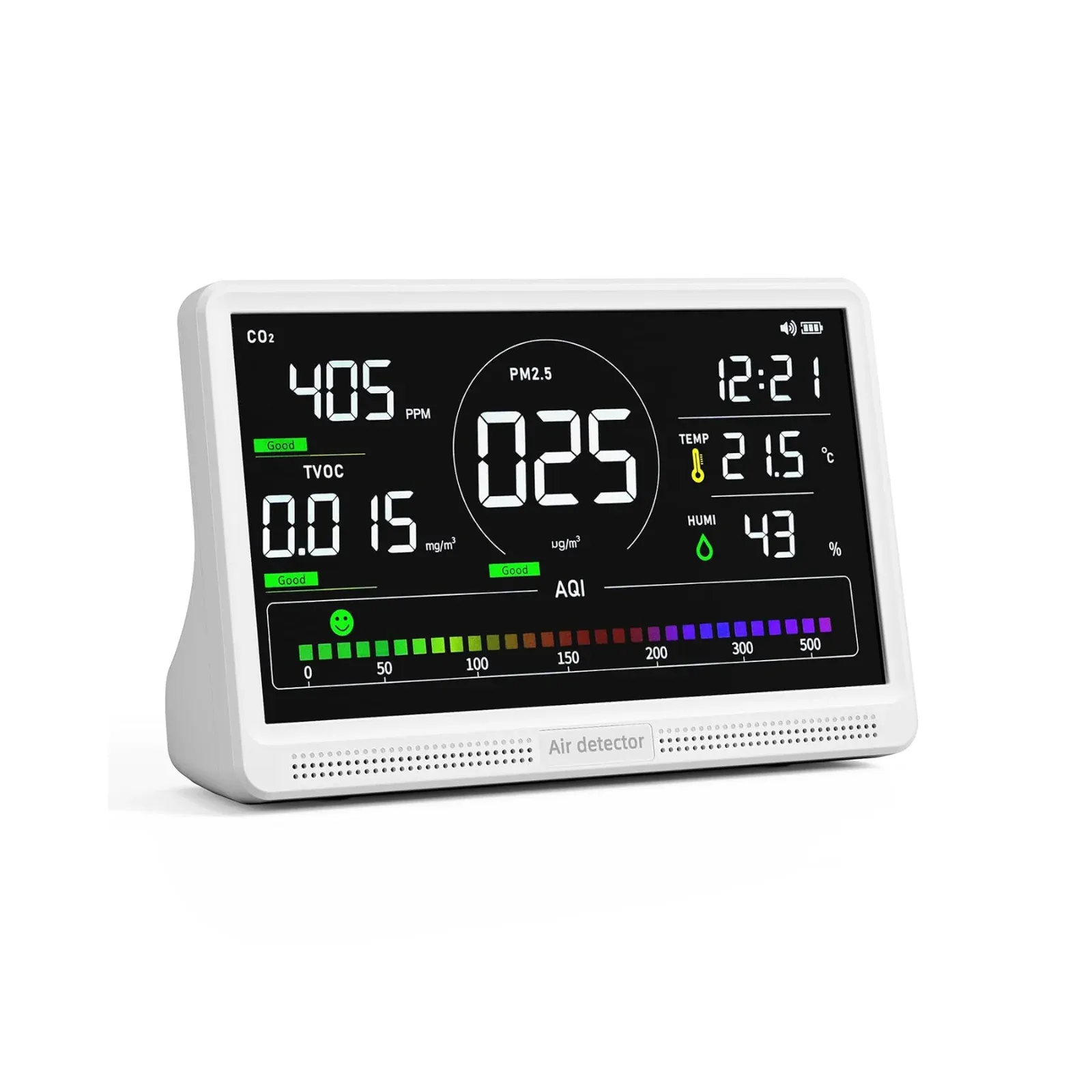
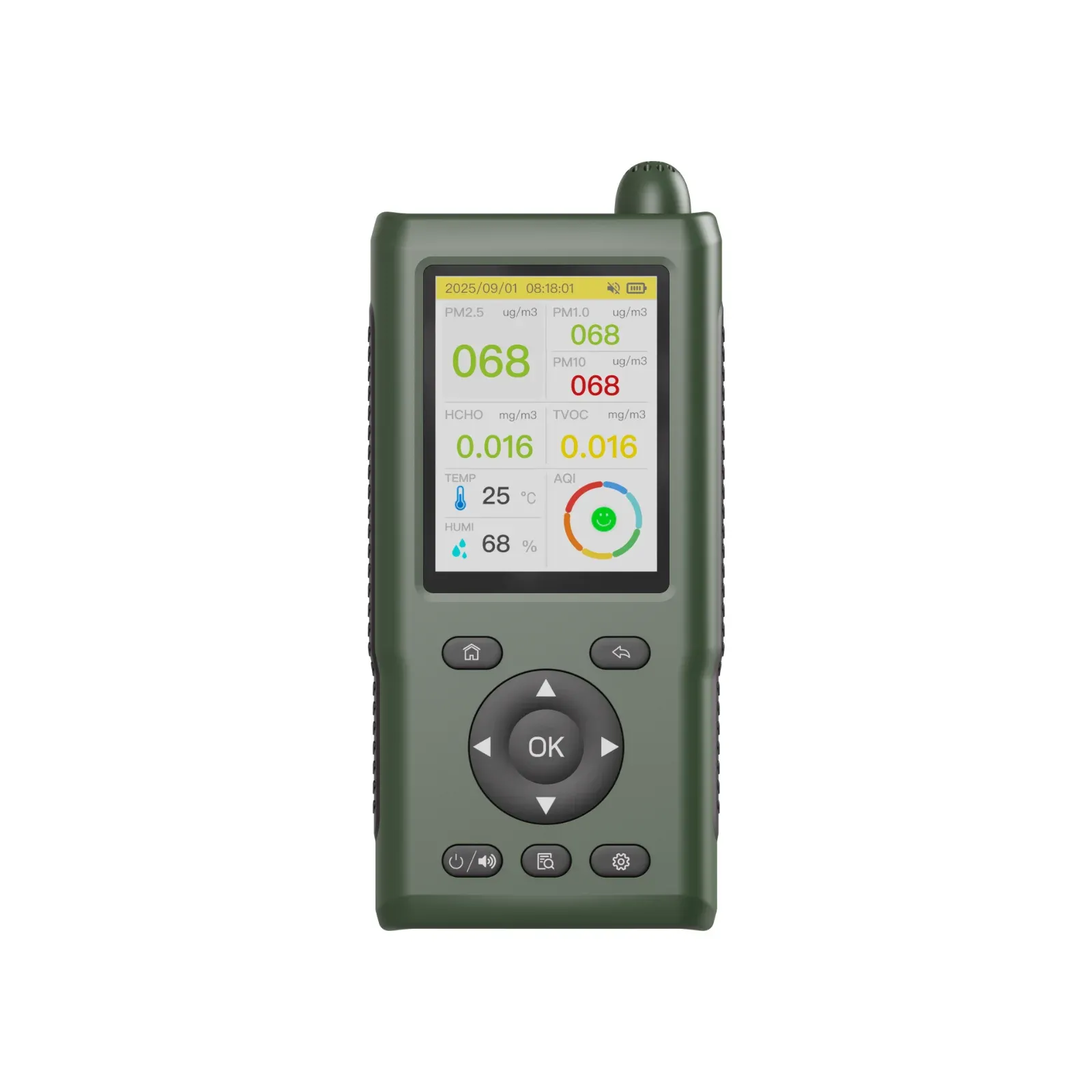
Desktop units suit fixed rooms where the display itself is the product — living rooms, meeting rooms, classrooms. Portable and handheld units suit people who move: inspectors, facilities walkthroughs, travel.
The display logic matters as much as the housing. A number readable across a classroom, a traffic-light band a child understands, or a dense dashboard for a technician are firmware decisions — cheap to change at specification time, expensive after tooling.
3. Plan the certification route with your importer
Which marks your product needs is decided by the market you sell into and who acts as importer of record — not by the factory. What the factory contributes is engineering the product so your chosen route is achievable, and preparing the documentation your importer files.
Settle this early. Retrofitting a certification route after enclosure and electronics are frozen is the most expensive kind of change order.
4. Be honest about volumes
Volumes drive everything a quote is made of: which platform is economic, whether custom tooling is on the table, and how much firmware customisation the programme can carry. A realistic first-order number plus an annual expectation gets you a build path you can actually compare against other suppliers.
What to send a manufacturer
- Target market and importer of record
- The sensing set, with the primary reading marked
- Form factor and where the unit will live
- First-order volume and annual expectation
- Any certification route your channel already requires