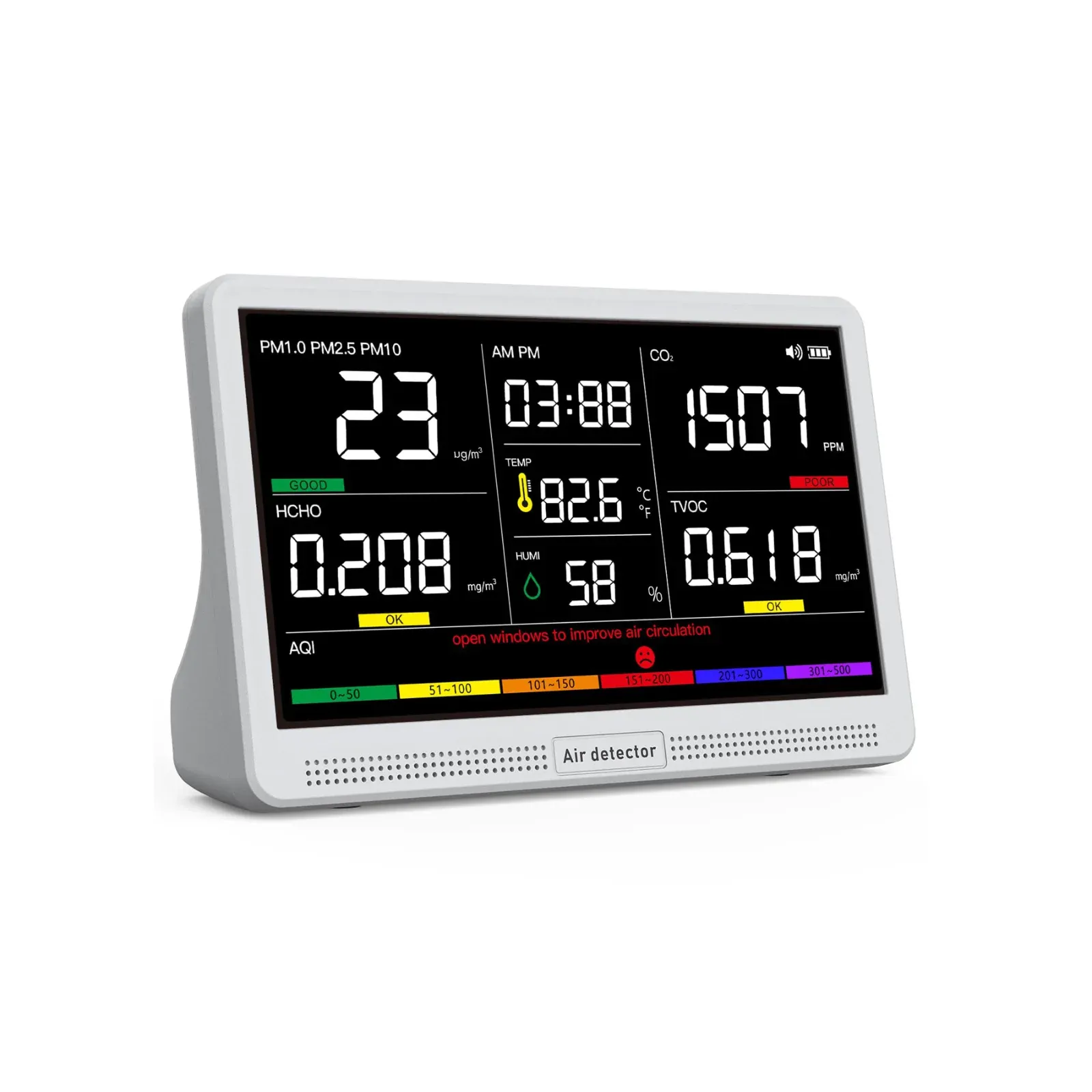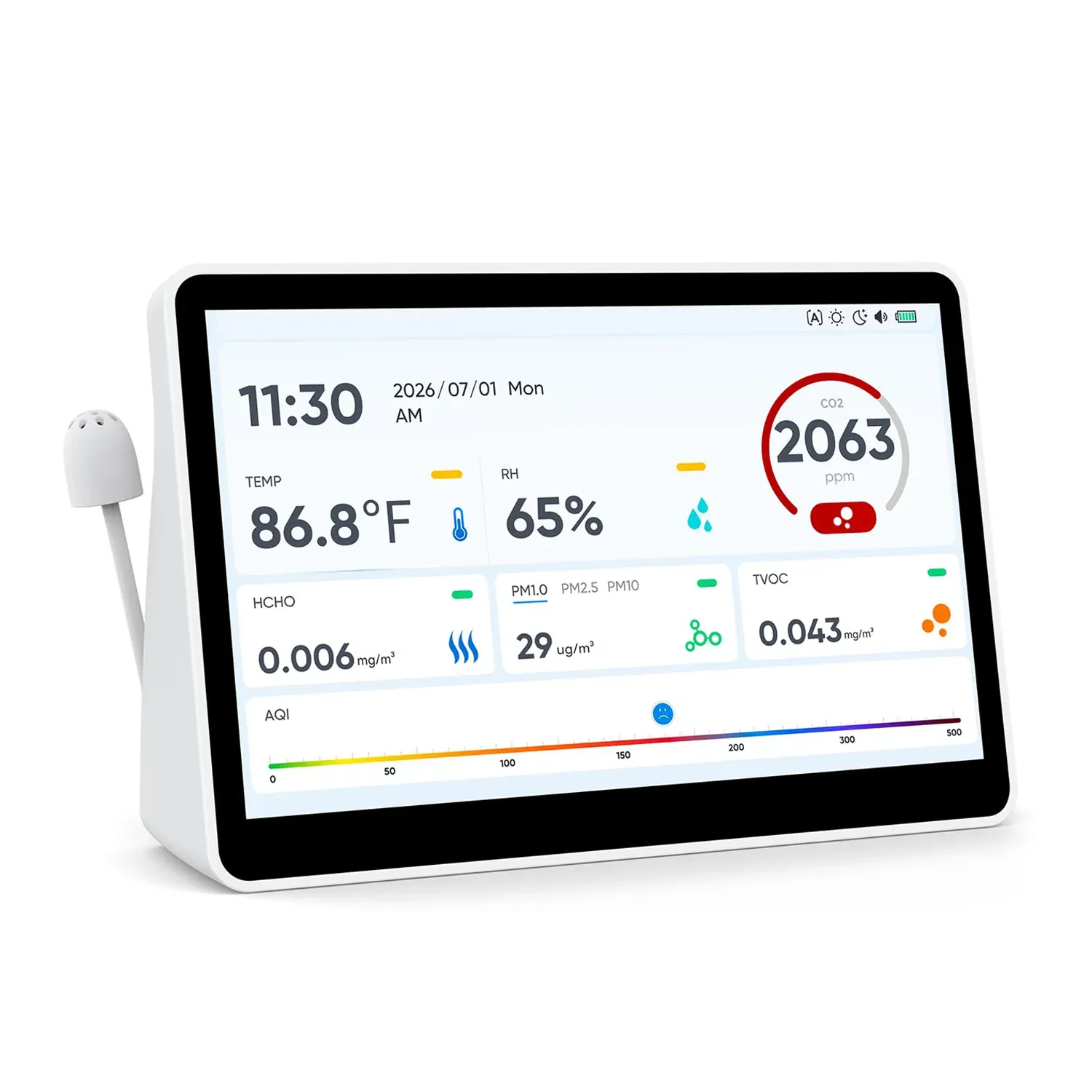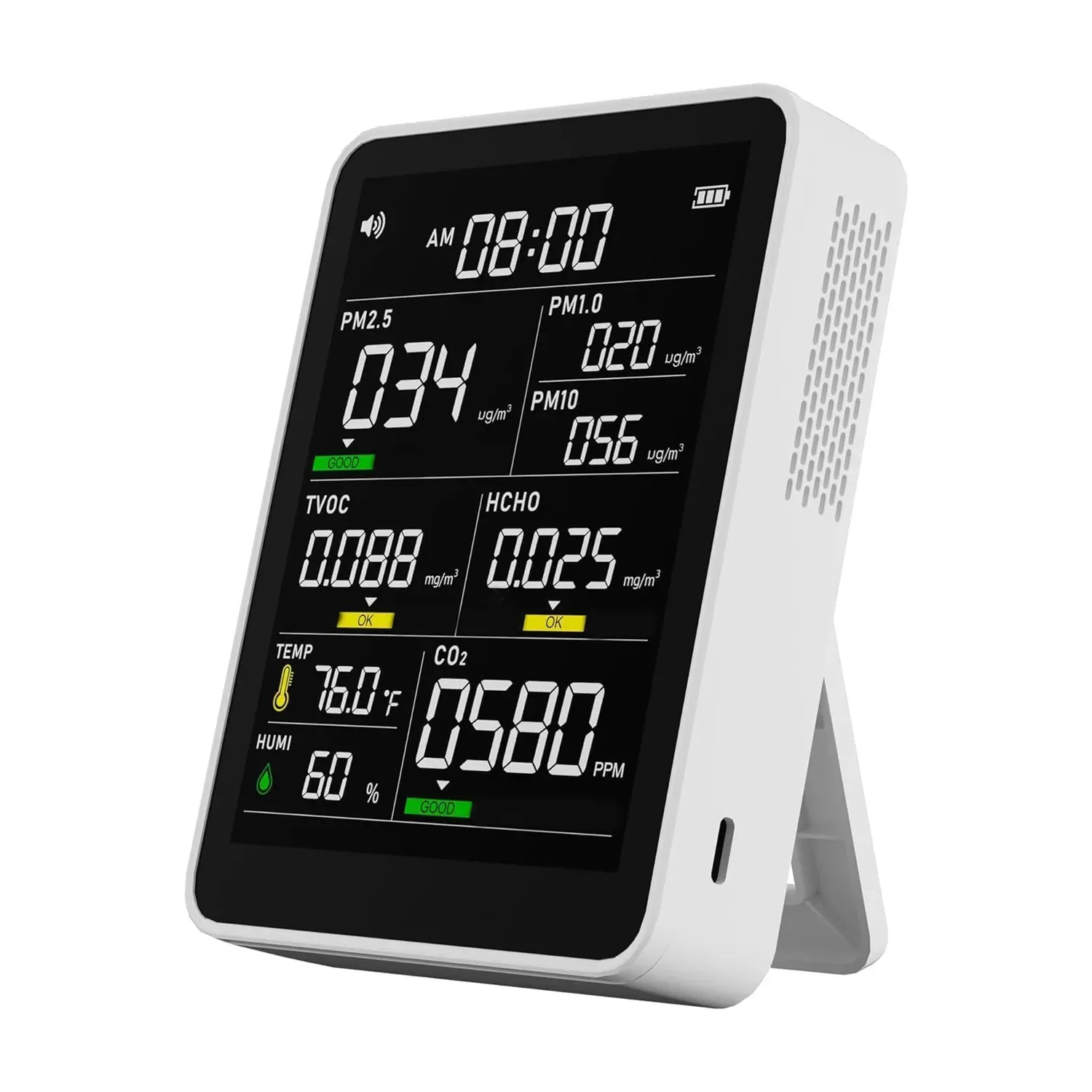


Why CO2, specifically
People exhale CO2 continuously, so its concentration tracks occupancy against ventilation in close to real time. A rising number means the room is not exchanging enough air for the people in it — and everything else that builds up in stale air rises with it.
Unlike particulate or VOC readings, CO2 needs no interpretation. One number, one trend, one action: ventilate. That simplicity is what makes it work as a wall-mounted product.
What matters in an office unit
Meeting rooms are the hard case: small, sealed, fully occupied in bursts. The unit needs a display readable from the table, a trend the facilities team can check at a glance, and a housing that looks at home in a fitted-out room.
Some markets publish workplace ventilation guidance that references CO2 levels; your importer will know what applies. The product decision is simpler — make the reading visible and people act on it.
What matters in a classroom unit
Thirty occupants, closed windows through winter, and a user base that includes children. Classroom units win on legibility: a large display readable from the back row, and colour bands that carry the message without numbers.
Schools also buy differently — by the corridor, through tenders, with an emphasis on robustness and simple operation. Housings and packaging should be specified for fleet rollouts from the start.
Specifying a CO2 programme
- Primary reading: CO2, with temperature and humidity as supporting context
- Display: readable at the room scale it will serve
- Alert logic: colour bands and thresholds set in firmware to your market
- Mounting and power: desk, wall or both; mains or battery expectations
- Fleet needs: packaging, labelling and rollout quantities