

Planning an IAQ monitor rollout across a multi-site property portfolio
A multi-site rollout succeeds or fails on the specification, not the hardware. This guide covers how monitors are sited and used across a portfolio, and what to settle before you commit.
Choosing the right monitor for each space
A property portfolio rarely needs one device everywhere. Different rooms fail on different parameters, and the sensor class you specify should follow the question the room is asking.
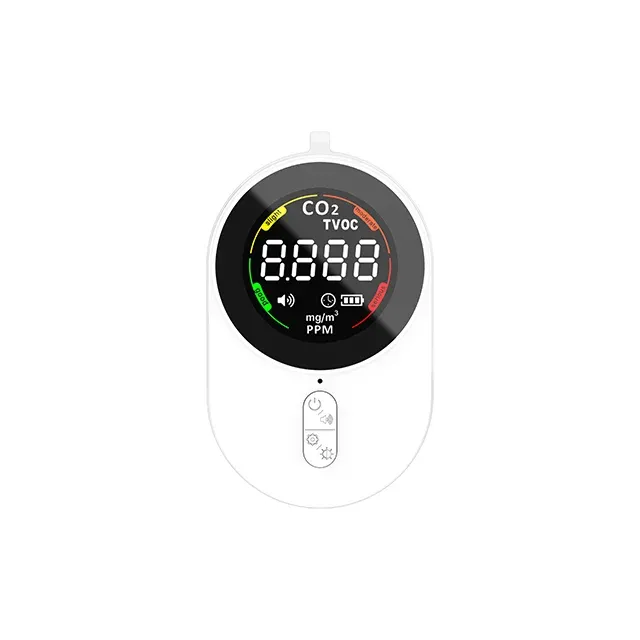
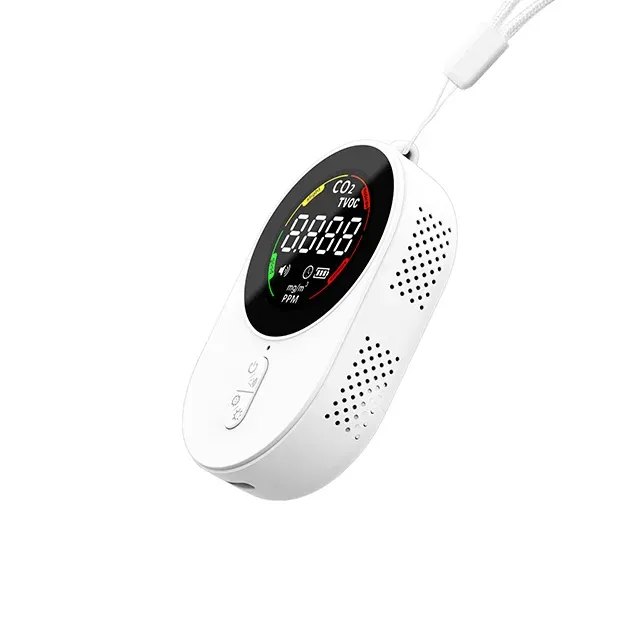
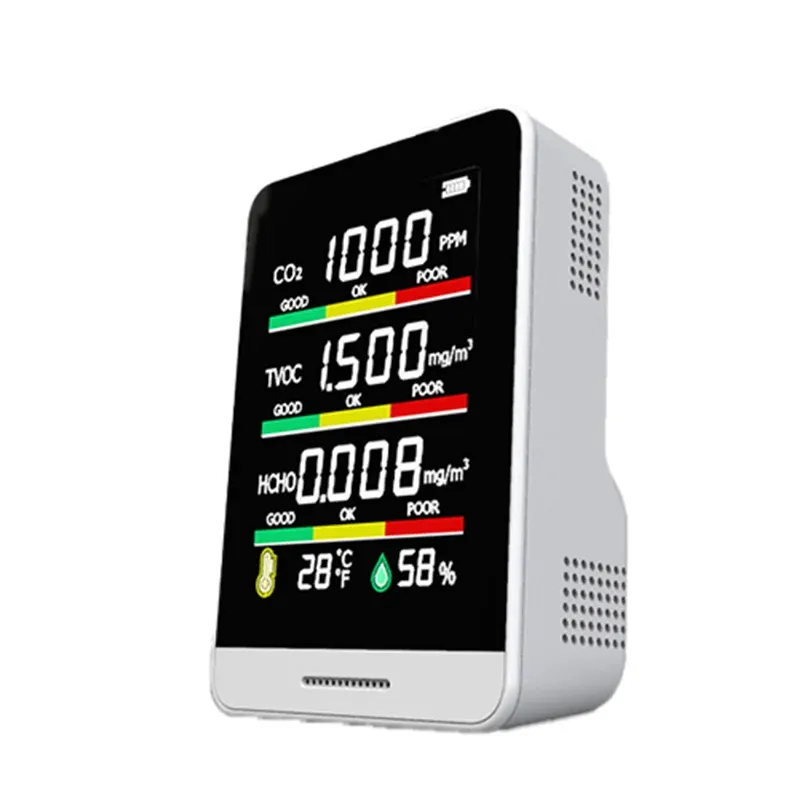
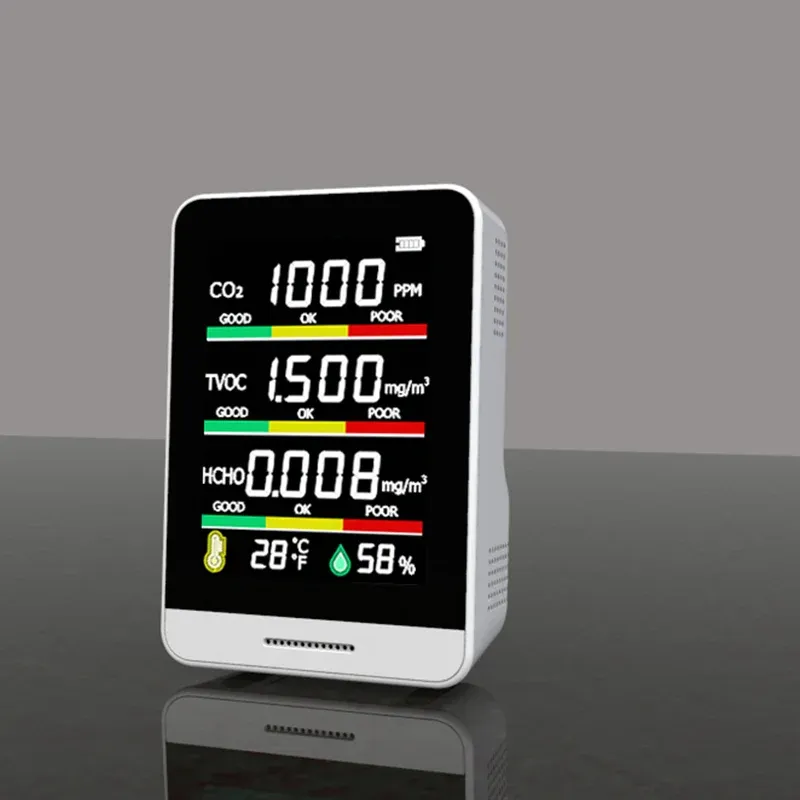
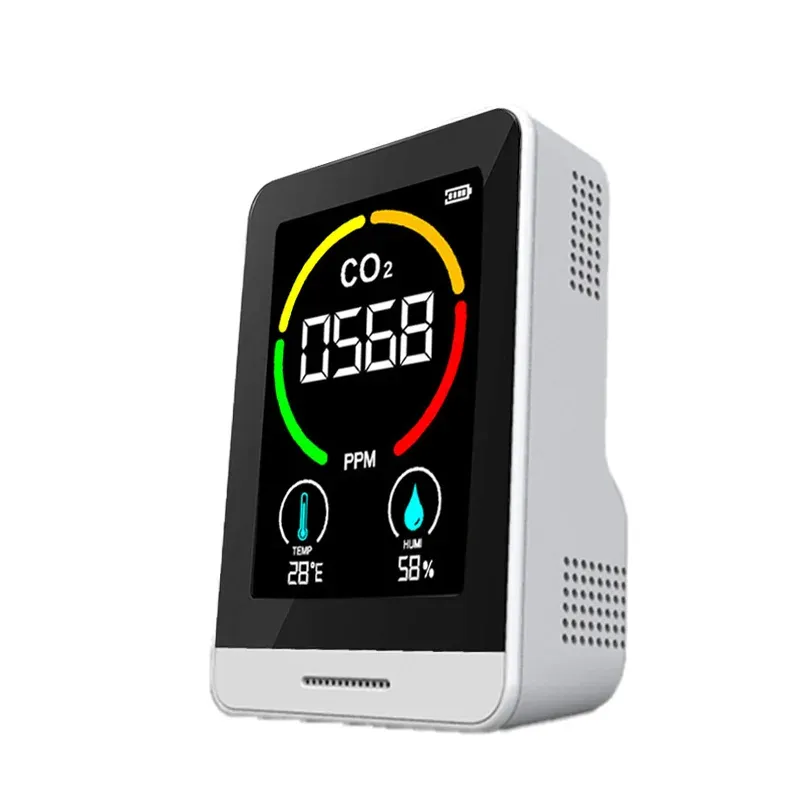
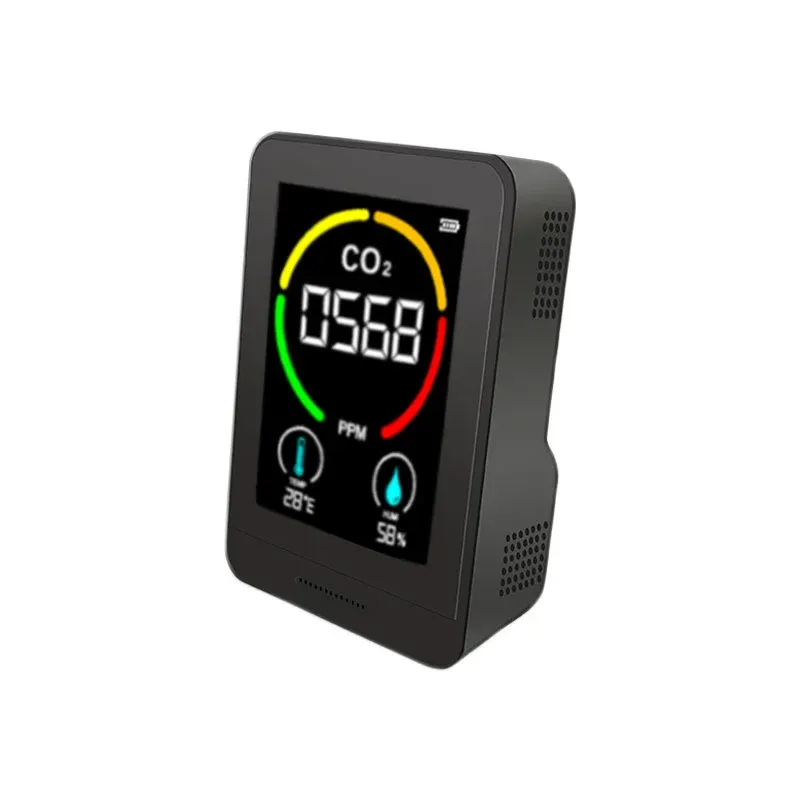
For occupancy-led spaces such as meeting rooms and classrooms, a CO2 channel shows how many people the ventilation is failing to keep up with. Where a figure has to be quoted in a ventilation assessment, the infrared NDIR channel in the AK4 gives a reading stable enough to compare month to month. The AK8 carries NDIR CO2 with temperature and humidity on an arc display, so the band registers from across a room.
Where particulates are the concern, a laser scattering module with a fan-drawn sample path produces a µg/m³ figure worth acting on. The AK11P reports PM2.5 alone, which suits filter-change checks and purifier audits.
Rolling out across sites
A portfolio rollout is a logistics problem as much as a sensing one. Shared shells and shared carton specs are what let you mix configurations on one pallet without a second freight calculation.
The AK11 family shares one shell, one colour box and a 50-per-carton spec across the AK11T, AK11H, AK11P and AK11C, so a mixed pallet ships as a single line item. The AK3 and the NDIR version AK4 share the same body, colour box and pack, letting a distributor carry both tiers on one pallet. The AK16A and AK16C share an enclosure, packaging and a 30-per-carton spec, giving two tiers from one production line.
Battery runtime shapes how a site is walked. The AK33 logs on board without a paired handset, so a survey can move through several rooms in sequence and read back where levels changed. The AK34 records both 24-hour and 15-day trend history, which supports pattern-finding across a week rather than a spot check.
Siting and mounting by room type
How a monitor is placed decides whether anyone reads it. Reception desks, lobbies and shop floors need a face that answers a question at a glance, while back-of-house rooms need detail.
The AK22B puts PM2.5 in a large central ring with a full-width AQI colour scale beneath, a layout built for somewhere people glance rather than study. The AK22A tiles six values with equal weight in a grid, which suits a technician scanning for the one value that has moved. The AK23B gives PM2.5 the centre of the screen at several times the size of anything else.
Where a desk gets knocked, the AK28A uses a moulded rear wedge stand at a fixed viewing angle rather than a fold-out leg. The AK23A hides its controls behind a clean front panel, so the device reads as furniture in a hotel room or showroom.
Parameters that change the specification
The parameter list is the first thing to fix, because adding a channel later changes the device, not just the settings. A single lumped particulate number hides which fraction is elevated, so PM1.0, PM2.5 and PM10 are reported separately by the laser module in the AK16A.
Where a composite index helps non-technical readers, the AK16C collapses eight readings into a single 0–500 figure with a colour scale while keeping every underlying value on screen. The AK23A separates particulates and gases into two dials rather than mixing them into one column.
Carbon monoxide belongs in a different conversation. The AK16D-CO adds an electrochemical CO cell, bringing the count to nine measured parameters. It is positioned as a monitor for continuous sited use with an on-screen alert, and where local regulations require a listed CO alarm it sits alongside one rather than replacing it. Kitchens with gas hobs, boiler rooms and attached garages are the configurations it is aimed at.
What to confirm before committing
Two things decide whether a rollout holds together: the certifications each model carries, and the enclosure and carton spec that governs how a mixed order ships.
Certifications vary by model and are shown only on each product spec sheet, so check the spec sheet of every model in your shortlist before you finalise it. Do not assume that what applies to one configuration in a family applies to the rest.
Enclosure sharing is the practical lever. The AK23A and AK23B share an enclosure, packaging and a 32-per-carton spec, so two distinct products reach your catalogue at the cost of one tooling. The AK25A and AK25AH share an identical enclosure and packaging, giving an accuracy tier without a second carton specification to manage. The AK28A shares its carton spec with the AK23 despite a different body, so the two platforms mix freely on a pallet.
- Confirm the spec sheet for each shortlisted model
- Group models that share an enclosure and carton spec
- Match battery runtime to how each site is walked
- Decide the parameter list per room type before ordering